Mostrando entradas con la etiqueta 50s. Mostrar todas las entradas

viernes, 21 de febrero de 2014

"What is a Teen-Ager?" by Al Hartley, 1957

Here you have a lovely description about how a teenage girl was for the comic-book writer Al Hartley in 1957.

According to these pages, I will tell what a teenager is in my own words: 

"What is a Teen-Ager? A teen-ager has an unbelievable knowledge of rock'n'roll music. She can drive her parents insane... or melt their hearts. No one can laugh as loud or cry as wet! A teen-ager dislikes getting up in the morning, gaining weight, doin the homework... But she likes drinking soda, clothes, magazines, movie stars... and she loves as crazy records, DJs and dancing!".

Al Hartley was an American comic-book writer artist in the 1950s. He created "Patsy and Hedy" and a few of Christian stories (he became a born again Christian en 1967). 

I couldn't resist to share these 4 pages. 


Aquí tenéis una simpática descripción, a modo de comic, de lo que era una adolescente para el dibujante Al Hartley en 1957. 

Basándome en su propuesta, lo describiré con mis propias palabras: 

"¿Qué es una adolescente? A una adolescente le gusta el rock'n'roll. Puede volver locos a sus padres... o derretir sus corazones. ¡Nadie ríe o llora como ella! A una adolescente no le gusta nada levantarse por la mañana, ganar peso o hacer los deberes... Pero le gusta beber soda, la ropa, las revistas, las estrellas de cine... ¡y ama con locura los discos, los pinchadiscos y salir a bailar!".

Al Harley fue un dibujante de comics americano durante los años 50. Entre otras cosas, responsable de "Patsy and Hedy" y de algunos comics religiosos (se pasó al cristinanismo en 1967).

No tengo el gusto de haber leído sus trabajos, pero estas cuatro páginas son para mí toda una declaración de principios.

martes, 19 de noviembre de 2013

LEWIS REED


La inesperada noticia de la muerte de Lou Reed hace ya un par de semanas, me impactó más de lo que esperaba. Sin ser nunca de mis artistas favoritos, siempre ha estado presente en muchos capítulos de mi vida. Recuerdo cuando recién empecé a escuchar sus discos con la Velvet Underground, que me parecía lo más aburrido del mundo. Por fin, con el paso del tiempo, he sabido apreciar algo más esas canciones repletas de vicio y depravación. Y en cuanto a sus trabajos en solitario, algunos temas esenciales y básicos que hace unos diez años me parecían monótonos y carentes de melodía, ahora parecen tener parte de magia (clásicos como “Vicious”, “Walk on the Wild Side” o ése ROCK ‘N’ROLL que es “Hangin’ Round”).

Aunque para mí, mi época favorita siempre será la de finales de los años 50 y principios de los 60, años anteriores a la Velvet Underground, cuando Lewis Reed comenzó su gusto por el rock’n’roll y el rhythm & blues. Afición que desarrolló tocando en multitud de bandas cuando iba al instituto.

Así que corría el año 1958 y Lou Reed, junto con dos compañeros de instituto y bajo el nombre de The Jades (también conocidos como The Shades), grabaron un single que salió editado por Time Records con dos auténticas joyas: “So Blue” y “Leave Her For Me”. Actualmente es pieza de coleccionista para todos los amantes del buen doo-wop, no sólo por ser la primera grabación editada de Reed, ¡sino también porque es que además suena a gloria bendita! El disco se pinchó por primera vez y adquirió cierta popularidad gracias al DJ Murray The K (“Do you remember Murray the K…?”) y gracias a ello, cuenta Lou Reed que recibió 78 centavos de royalties. Además, King Curtis fue el músico de sesión responsable del sonido del saxo. Lo dicho: ¡una joya total!

Existen un par de canciones del mismo rollo que Lou (ahora Lewis Reed) grabó en solitario en 1962, pero que no se editaron hasta el año 2000: “Your Love” y “Merry Go Round”. Ambas pueden encontrarse en el Rockin’ On Brodway de Ace Records y, junto con las otras dos que grabó con los Jades, en un EP que el mejor sello del mundo (ése llamado Norton Records) sacó por esa misma época bajo el nombre de “All Tomorrow’s Dance Parties”. Básico, tanto si eres fan de Lou Reed como si amas la música de los años 50.


Poco tiempo después, tras acabar la Universidad, empezaba una nueva etapa musical en Pickwick Records como compositor y músico de sesión. Nacen unos cuantos temas que no pasarán a la historia de la música por su originalidad o calidad, pero no por ello significa que sean malos. ¡Todo lo contrario! Uno de ellos es “Cycle Annie” de The Beachnuts, tema co-escrito y cantado por Lou, donde se le puede escuchar además tocando la guitarra. En su época nunca salió editado en single, sino que fue grabado para su aparición en los recopilatorios “Out of Sight!” y “Soundsville”. En éste último también se  puede encontrar lo que se ha convertido en uno de mis últimos descubrimientos y que me ha hecho perder la cabeza todavía más: “You’re Driving Me Insane” de los Roughnecks.


Y es en estos años con Pickwick Records, cuando conoce a John Cale y se produce la primera colaboación con él. Juntos trabajaron en la composición de “Why Don’t You Smile Now” de los All-Night Workers. Un tema clásico del garage, que años más tarde sería versionado por bandas como Downliners Sect o Dr. Explosion.  

Y precisamente de esta amistad con John Cale, nacen The Primitives, banda a la que habría que remontarse para empezar a hablar de la historia de la Velvet Underground.

The Primitives sólo nos dejaron un par de canciones: “Sneaky Pete” y “The Ostrich”. No sé como sonarían en su época, allá en 1964, pero a día de hoy siguen teniendo un sonido sucio y peculiar, claro ejemplo de lo que haría Reed posteriormente en su etapa experimental con la Velvet Underground. “The Ostrich”, de hecho, es una parodia a los bailes de moda de la época y es en este tema cuando Reed crea el término “ostrich guitar”, técnica que utilizaría en alguno de los temas que conformarían el álbum “The Velvet Undergrounud & Nico”.


Todo esto, y algún que otro trabajo más como músico de sesión, fue lo que realizó Lou Reed antes de grabar uno de los discos fundamentales en la historia de la música. Todas las grabaciones se pueden encontrar en recopilatorios, reediciones, singles y ‘bootlegs’ de la Velvet Underground. Y por supuesto, para cualquier escucha, ¡no dejéis de consultar YouTube!


Lou Reed passed away a few weeks ago and it was a really shock for me. He never was one of my favourite artists, but he always was present in many chapters of my life. I remember when I started to listen to The Velvet Underground. They were truly boring records for me. Finally, time has gone by and now I am able to appreciate that songs full of vice and perversion. And about solo works, some essential tunes that I heard dull and without melody, now they seem they have magic (classic songs as “Vicious”, “Walk on the Wild Side or that ROCK’N’ROLL called “Hangin’ Round”).

However, my favourite years will always be the late 50s and early 60s, the years before to The Velvet Underground, when Lewis Reed started to feel interest for rock’n’roll and rhythm & blues. He developed this passion playing in many bands when he attended to high school.

So it was 1958 and Lou Reed together with two high school mates and under the name of The Jades (also known as The Shades) recorded two gems for one 7” released by Time Records: “So Blue” and “Leave Her For Me”. At present this is a collector piece for every doo-wop lover, not just because it is the first record by Lou Reed, but because it sounds amazing! This record was played and it took popularity thanks to DJ Murray The K (“Do you remember Murray the K…?”). Lou Reed told the gained 78 cents for royalties. Besides, King Curtis was the session musician in charge of the saxo sound. I’ve said: this is a totally gem!

There are a couple of songs in the same way that Lou (now Lewis Reed) recorded as a solo artist in 1962. But they didn’t were released until year 2000: “Your Love” and “Merry Go Round”. Both can be found in Rockin’ On Broadway comp of Ace records as well as in an EP that the best label in the world (that called Norton Records) released in that time under the name “All Tomorrow’s Dance Parties” together with the another two songs he recorded with The Jades. This is essential if you are a Lou Reed follower as well as if you love 50s rock’n’roll.

Later, as soon as he finished the University, he started a new musical stage in Pickwick Records as songwriter and session musician. A few tunes were born and they may don’t pass into music history by their innovation or quality, but it doesn’t mean they are cheap tunes. On the contrary! “Cycle Annie” by The Beachnuts is one of them. Lou Reed co-wrote and sang in this song and you can hear his guitar. It never was released as a single in those years but it was recorded to appear in “Out of Sight!” and “Soundville” comps. In the latter, you can find what has become one of the last findings that have made me do crazy once again: “You're Driving Me Insane” by The Roughnecks.

So, he met John Cale working with Pickwick Records in these years and they collaborated for the first time. They worked in the songwriting of “Why Don’t You Smile Now” by The All-Night Workers. This is a classic garage song and it would be covered by Downliners Sect or Dr. Explosion years later.

And it is thanks to this friendship when The Primitives are born. If we have to talk about the roots of The Velvet Underground we would have to go back to this band.

The Primitives just recorded two songs: “Sneaky Pete” and “The Ostrich”. I don’t know how the sound would be in those years, but today that sound is dirty and outrageous. They are an example about what Lou Reed would do in the experimental years with The Velvet Underground. In fact, “The Ostrich” is a parody of popular dance songs of the time. And Lou created the term “ostrich guitar” thanks to this song. He would use this technique in some of the songs of the album “The Velvet Underground & Nico”.

Lou Reed made this and many more as a session musician before record one of the essential albums in the music history. Every recording can be found in compilations, singles, reissues and ‘bootlegs’ of The Velvet Underground. Of course, feel free to check out YouTube if you wish to hear any of these tunes!


sábado, 29 de junio de 2013

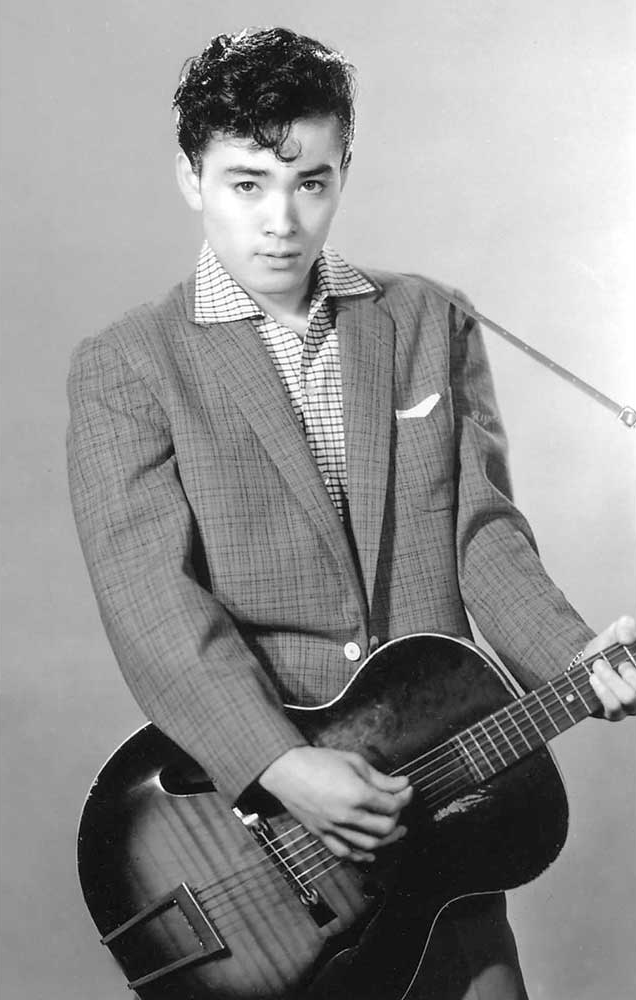
MASAAKI HIRAI. ¡El Elvis japonés!


Ace Records tiene el placer de presentarnos a Masaaki Hirao. ¡Nada más y nada menos conocido como “el Elvis japonés”! A principios de 1958, ya había tenido lugar el rockabiri buumu (“rockabilly boom”) en el País del Sol Naciente. Mickey Curtis, Keijiro “Kei-chan” Yamashita y Masaaki Hirao fueron tres de los exponentes en este género dentro de su país, conocidos como los Rokabirii Sannin Otoko (“Three Rockabillies”).


En el disco podéis encontrar temas propios y versiones de Elvis Presley y Eddie Cochran, pasando por Little Richard o Neil Sedaka. Pero no os engañéis. Los comienzos del rock’n’roll nipón nada tienen que ver con el sonido salvaje del garage-punk que empezaron a adoptar a partir de los años 90. Se trata más bien un sonido refinado con influencia del jazz y que se acerca, como no, a la música enka, típica del folklore japonés.


Este disco es sólo para frikis muy frikis del rock’n’roll y/o de la cultura japonesa popular. ¡Y perfecto para que una reseña como ésta sea publicada en nuestro blog “Banzai!”!


MASAAKI HIRAI. The Japanese Elvis!

Ace Records has the pleasure to introduce Masaari Hirao. None other than “The Japanese Elvis”! In early 1958, the rockabiru buumu (“rockabilly boom”) was born in the Land of the Rising Sun. Mickey Curtis, Keijiro “Kei-chan” Yamashita y Masaaki Hirao were famous rock’n’roll singles in this country, famed Rokabirii Sannin Otoko (“Three Rockabillies”).

You can hear in this record original songs and Elvis, Little Richard and Neil Sedaka covers. But you don’t feel disappointed. Early Japanese rock’n’roll is nothing to do with the wild garage-punk sound they started to play from the 90s. It’s a fine sound with jazz influence and very close to enka traditional Japanese music.

I think this is record is just for very rock’n’roll freaks and/or Japanese pop culture lovers. And it’s perfect a review like this is published in “Banzai!”.


sábado, 27 de abril de 2013

VV.AA. Too Much Rockin' (Wendi Records, 198?)


Entre mediados y finales de los 80, el sello australiano Wendi Records comenzó a sacar una serie de volúmenes dedicados al rockabilly, el R&B o el doo-wop. El único disco que yo tenía hasta ahora del sello era el “From The Garage To The Studio”, una recopilación de temas raros de rock’n’roll de los 50 que me compré hace tiempo en una de las tiendas de la calle Tallers de Barcelona (¡visita obligada para cualquier yonki de los discos!).

Años después, y tras un largo periodo de búsqueda y captura, soy la feliz poseedora del “Too Much Rockin’”, referencia número cuatro del sello Wendi y con los Hermanos Marx en la portada (no sé por qué). De alguna manera llegó a mis oídos, y desde entonces es uno de mis discos favoritos. La mayoría son temas de entre 1958 y 1962. Rhythm & blues y doo wop. Rock’n’Roll negro, en definitiva.


Thurston Harris
Vienen un par de temas de Thurston Harris para Aladdin: “Smokey Joes” y (el mejor) “Do What You Did”. De Young Jessie incluye el famoso “Hit, Git & Split” y la cara B del single que tampoco tiene desperdicio. Similar a éste tema es otro ya clásico entre las rarezas de R&B como es el “Juicy Fruit” de Rudy Green, ¡con piano y saxo sonando durante toda la canción! “Rock, Rock, Rock” de los Blue Jays es otra de las canciones que más me gustan del disco, claro ejemplo de rock’n’roll de grupo vocal, como el “Rock’n’Roll Radio” de Joe Boot & The Fabulous Winds. Hablando de grupos vocales, en la cara B aparecen los Electras con “Ten Steps To Love”. Tema FAVORITO de doo-wop. The Electras grabaron años antes dos de los rocanroles más salvajes que he podido escuchar bajo el nombre de The Valiants, y como The Untouchables también tienen material bueno. Hay mucha historia detrás de este grupo y espero poder contar más adelante. Quiero decir con todo esto que no es de extrañar que con este tan buen gusto, “Ten Steps To Love” sea TAN bueno.
Chuck Higgins


A parte de todo esto, viene una versión del “Stay” de Maurice Williams por Porgy and The Monarchs; el famoso “Mamma Get Your Hammer”, del que se dice que es el (atención) único blanco del disco: Bobby Peterson. Y Ray Sharpe, Chuck Higgins, Dean and Jean…

Sólo se sacaron 300 copias, así que afortunados quienes tengamos en nuestras manos semejante tesoro.


At the middle or late 80s, the Australian Wend Records started to release some issues focus on rockabilly, R&B or doo-wop. My only record from this label was “From The Garage To The Studio”, a 50s rare rock’n’roll compilation I bought in a record shop a long time ago in Tallers street in Barcelona (essential visit for any vinyl records junkie!).

A few years ago and after a long searching time, I am the happy owner of “Too Much Rockin’” LP, reference number 4 of Wendi Records and with the Marx Brothers on the front (I don’t know why) Since I heard it for the very first time, it has been one of my favourite records. The most tunes are between 1958 and 1962. R&B y doo wop. Black rock’n’roll, definitely.

You can find a couple Thurton Harris tunes which were released by Aladdin Records: “Smokey Joes” and (the best) “Do What You Did”. It includes the famous “Hit, Git & Split” by Young Jessie and also brilliant flipside. A reminiscent of this one is the rare R&B classic “Juicy Fruit” by Rudy Green, with piano and killer saxo playing for the whole song! “Rock, Rock, Rock” by The Blue Jays is another of my favourite songs of this record, an example of good rock’n’roll by a vocal group, like “Rock’n’Roll Radio” by Joe Boot & The Fabulous Winds. By the way, you can fint The Electras and “Ten Steps To Love” on the B-side. FAVORITE tune. The Electras recorded two real killer rock’n’roll songs a few years before as The Valiants. And you can find another good songs under the name of The Untouchables. There’s too much to tell about this band and I hope I’m able to tell in the next time. If they had a really good musical taste, I mean it’s hardly surprising “Ten Steps To Love” is SUCH a killer tune.

Besides, you can find Maurice Williams’ “Stay” covered by Porgy and The Monarchs;  the famous “Mamm Get Your Hammer” by (apparently) the only non-black artist featured on this LP: Bobby Peterson. And Ray Sharpe, Chuck Higgins, Dean and Jean…

Wendi Records just released 300 copies approx. Lucky us who can hold in our hand such gem. 

Dean and Jean

jueves, 20 de diciembre de 2012

VV.AA. Boppin' Bobbie Jean - 16 Hot Rockin' Tracks (Stock Car Records, 2008)


¡Disco nuevo! Regalo de mi muchacho por mi cumpleaños.

Una recopilación cojonuda de 16 temas raros de rock'n'roll, rockabilly y algunos instrumentales de finales de los 50 y principios de los 60 (¡lo mejor de lo mejor!). 

Abre y da nombre al disco un tema de King Victor. De la cara A destacaría el "The Right To Rock" de Trini Lopez, una de sus primeras grabaciones para el sello Volk. Y uno de los mejores temas es el increíble "Dragon Walk" de los Nobelmen, un clásico del sonido instrumental con saxofón y sonido fuzz, rollo tittyshaker, al estilo de  los Las Vegas Grind. 

El divertido "Guitar Boogie Twist" de los Virtues es otro de los instrumentales que trae. Y también a ritmo de twist se encargan los Four J's de contar uno de los pasatiempos favoritos de los adolescentes de los años 50 en el "Kissin' at the Drive-In". Muy "high school"

Entrando más en los 60, Simon Scott se marca una un tema de lo más vacilón con "Move It Baby". Y de 1965 viene una canción de Ken West llamada "You Give Me The Willies", muy rara, y que me recuerda a Charlie Feathers. Pero para rara, el "Rhythm Rock" de Jackie and  his Rocking Boys, que todavía no pillo en qué idioma está. Parece francés. Con la que no hay duda es con "El Rock del Ton Ton" de Johnny Tedesco, ¡el Elvis argentino! Un rock'n'roll desde latinoamérica cantado en español y con el que se cierra este tremendo recopilatorio. 

"Kissin' at the Drive-In"


New record for my collection! My boy gave me it for my birthday. 

This is an awesome comp of 16 rare rockin' tracks from late 50s and early 60s (best of the best!!). 

The record is called like a King Victor song and it is the first tune of the comp. One of my favorites is "The Right To Rock" of Trini Lopez, one of his early recordings for Volk Records. And one of the best tunes is "Dragon Walk" of The Nobelmen, a killer classic teen instrumental tune with saxo and fuzz sound, tittyshaker and Las Vegas Grind comps style. 

The funny "Guitar Boogie Twist" of The Virtues is another instro tune. And  The Four J's tell about one of the favorite interests of American teenagers in the 50s in "Kissin at the Drive-In" like a twist dance and high school sound too. 

Entering in the 60s, Simon Scott sings with a cool style in "Move It Baby". And there's a 1965 rare song of Ken West called "You Give Me The Willies", maybe similar to Charlie Feathers. But "Rhythm Rock" of Jackie and his Rocking Boys is rarer, and I don't know yet what language is! Sounds like French. Although there isn't any doubt with "El Rock del Ton Ton" of Johnny Tedesco, the Argentinian Elvis! Real rock'n'roll in Spanish from Latin America which close this brilliant comp. 

miércoles, 19 de diciembre de 2012

Los jóvenes de los años 50 por NINA LEEN

Aunque nació en Rusia a principios del siglo y se crió en Europa, Nina Leen llegó a Estados Unidos en 1939. Pronto se convirtió en una de las primeras fotógrafas de la revista LIFE, para la que realizó más de cuarenta portadas.

Sus reportajes abarcaban principalmente la vida social y la moda de aquella época. Mis favoritas: los retratos de la cultura adolescente en los años 40 y 50. Instantáneas de grupos de amigos tomando batidos, los bailes de instituto o de compras en tiendas de discos. 

Aquí va una muestra de ello.  


50s American Teenagers by NINA LEEN

Although she was born in Russia in the early 20th century, Nina Leen arrived to USA in 1939. Soon she became one of the first women photographers for LIFE magazine, which she did more than forty covers.

Her works include the American social life and fashion of that era. My favorites: teen culture pics in the 40s and 50s. Friends taking milkshakes, high school sock hops or shopping at the records store.

You have an example above.

domingo, 16 de diciembre de 2012

El payaso CLARABELL: los orígenes de DIVINE


El payaso Clarabell, una de las primeras influencias de John Waters desde su más tierna infancia, en los años 50, cuando veía el "The Howdy Doody Show". 


Un personaje terrorífico para él y de lo más bizarro, le inspiró para el maquillaje que caracterizaría a su musa Divine en "Pink Flamingos". 


CLARABELL the Clown: DIVINE roots

Clarabell the Clown, one of the earliest John Waters influences in the 50s, when he was watching "The Howdy Doody Show".

Divine's make-up would be inspired by this psychotich and scary freak character years after.


miércoles, 21 de noviembre de 2012

JIMMY WAGES. ¡Real 50s Rockabilly Punk!


Compañero del colegio de Elvis, Jimmy Wages fue uno de los artistas más oscuros que pasó por la Sun Records. Y en todos los sentidos. A diferencia de los demás artistas que lo acompañaban en el sello, no tocaba ningún instrumento y fue autor de los cuatro temas que grabó. Puede que “Heartbreakin’ Love” sea el más convencional, pero parece que fue poseído por el mismísimo Satanás cuando escribió “Mad Man”, “(Take Me From This) Garden of Evil” y “Miss Pearl”. 

Por esa misma razón, sus temas nunca llegaron a editarse. Sam Phillips se interesó por sacar “Mad Man”, pero al productor Jack Clement no le pareció buena idea porque tenía un sonido nada comercial. Así que tuvieron que pasar algo más de veinte años para que las grabaciones salieran a la luz.

Lo único que llegó a editar Jimmy Wages fue un single para el sello Tom Big Bee. Y existe también un fragmento de 30 segundos para la Sun. Eso es todo.  

Gracias a la labor de Charly Records, la Bear Family y sus That’ll Flat Git It, y la colección de singles raros de la Sun editados por Norton, hemos podido disfrutar del breve trabajo que dejó este precursor del ¿psychobilly?

Y como muy bien lo define Clive Anderson en la caja “The Sun Records Story”: 

 “Punk gospel meets Southern gothic!”.


Elvis schoolmate, Jimmy Wages was one of the most obscurest artists who recorded at Sun Records in every way. Unlike the rest, he did not play an instrument and wrote all of his own material. Maybe “Heartbreakin’ Love” is the most conventional, but he look likes possessed by the devil when he wrote “Mad Man”, “(Take Me From This) Garden of Evil” y “Miss Pearl”.

That’s the reason why he never released a song. Sam Phillips was hot to launch "Mad Man”, but producer Jack Clement reportedly talked him out of it, sensing that it had any true commercial appeal. So, songs remained unreleased until some 20 years later, when the music of Jimmy Wages was finally heard by the worldwide rockabilly community and lauded as raw Genius.

One 7” for Tom Big Bee label was the only one he released. Also there’s an unknown tape fragment in Sun. That’s all.

We have been able to enjoy his short work thanks to Charly Records, Bear Family’s That’s Flat Git It comps, and Norton’s Sun Rarities Series. Maybe he was a precursor of ¿psychobilly?

As Clive Anderson says very well about him in “The Sun Records Story” box: 

“Punk gospel meets Southern gothic!”.

martes, 18 de septiembre de 2012

Antes de Bettie: la misteriosa KEVIN DALEY

Observando las miles de fotografías que existen de pin-ups de los años 50, resulta fácil comprobar que los peinados de moda de la época estaban hechos en su mayoría a base de rulos: raya al lado, frente despejada y rizos por encima del hombro. Por eso siempre me han llamado la atención las modelos de la época que, como Bettie Page, iban con la melena peinada a ondas y ocultaban su frente bajo un característico flequillo.


Esa imagen se asociará para siempre a la guapísima Bettie, lo que no quiere decir que fuera la única durante esos años que llevara ese peinado. No es fácil encontrar modelos de los años 50 con flequillo corto y melena ondulada, por eso Kevin Daley supone una excepción. Además fue precursora del "peinado Bettie", pues sus fotos empezaron a publicarse en revistas a finales de los años 40, antes de la Page. De hecho, los fotógrafos que comenzaron a trabajar con Bettie, ya la relacionaban por entonces con Kevin por su peinado. Y, según cuenta la leyenda, fue el fotógrafo aficionado Jerry Tibbs, su descubridor, quien sugirió que probara a dejarse un flequillo para disimular su frente. 

No hay mucho más que decir sobre Kevin Daley. Existen algunas modelos más de esta época de melena y flequillo, aunque menos conocidas. Sea como sea, esto queda sólo como algo anecdótico, porque de pocas modelos pin-ups existen infinitas fotos como las que hay de Bettie y ninguna de ellas poseía el carisma y la fotogeneidad que caracterizaban a la del título tan bien merecido de “Reina de las Pin-Ups”.


Before Bettie: mysterious KEVIN DALEY

If you watch the thousands of pin-ups pics from the 50s, it’s easy to check that the most of fashion hairstyles was made with rollers: side part hair, nothing in the forehead and curlies over the shoulders. For that reason I’ve always been surprised each time I see pin-ups from that era with long, dark, wavy hair and smooth, blunt-cut fringe like Bettie Page.

That image will be always associated with the beautiful Bettie, but this doesn’t mean she was the only one who was wearing that hairstyle. It’s not easy to find 50s pin-ups with short fringe and long wavy hair, so Kevin Dayle is an exception. Besides, she was a precursor of the “Bettie Page hairstyle” because her pics began to be published in men magazines at late 40s, before the Page. In fact, photographers who started to work with her referred to her as “Kevin Dayle lookalike”. And according to the legend, the amateur photographer and policeman Jerry Tibbs, he suggested she cut her hair in bangs because of her high, prominent forehead.
There’s no much more to tell about Kevin Daley. There are some more models from the 50s with wavy hair and bangs, although they are a little less unknown. In any case, this is just an anecdote, because there are only a few pics of  pin-up models like the Bettie pics and anyone had the charming and the photogenic thing that characterized to the well deserved title of “Queen of Pin-Ups”


lunes, 20 de agosto de 2012

IKE TURNER - Real Gone Rocket / Down and Out (Penniman Records, 2012) ¡LO MEJOR DEL AÑO!

Tal vez sea pronto para decidir los mejores discos del año, pero poca cosa podría  superar a los dos recopilatorios de Ike Turner que lanzó Jerome Records a principios  de año: "Down and Out" y "Real Gone Rocket". ¡No hay palabras!

Los dos reúnen grabaciones de Ike en su primera época durante los años 50, tanto en  solitario como líder de los Kings of Rhythm y junto a otros artistas. Vocalista,  pianista, guitarrista, compositor, productor, músico de sesión... todas sus facetas están registradas en ellos.

De Down and Out me gustaría destacar "I'm Lonesome Baby", su primer single editado  para Chess y producido por Sam Philips. O la maravilla que es "Boxtop", primer trabajo de Little Ann Mae Bullock que tiempo después pasaría a ser más conocida como Tina Turner.

Y en cuanto a "Long Gone Rocke", incluye parte de sus trabajos como músico de sesión una selección de temas que no podría haber sido mejor: Jackie Brenston, The Sly Fox (¡atención al sonido de la guitarra de Ike!), Billy Gayles, Gardinias, Icky Renrut (seudónimo de Ike)...

Que nadie se lo pierda. ¡AUTÉNTICO 50s PUNK!


The best records of the year!

Maybe it's early to decide the best LPs of the year, but I'm sure nothing can be better than these Ike Turner compilations launched by Jerome Records at beginning 2012: "Down and Out" and "Real Gone Rocket".

Both have early Ike recording sduring the fifties, as a solo artist as leader of Kings of Rhythm and with another artists. Singer, pianist, guitarist, composer, producer, session man.. Every side of him is registered in them.

I would like to emphasize the song "I’m Lonesome Baby", his very first 45 released by Chest and produced by Sam Philips. Or the wonderful "Boxtop", the recording debut of Little Ann Mae Bullock, better known as Tina Turner.

And about Long Gone Rocket, it contains some of his works like session man. And the tunes selection couldn't have been better: Jackie Brenston, The Sly Fox (pay attention to the guitar's Ike sound!!), Billy Gayles, Gardinias, Icky Renrut (Ike's nickname)...

Don't miss it. REAL 50s PUNK!!!

jueves, 19 de julio de 2012

THUNDER ROCKS - Rampage b/w Bugle Rock. (Get Hip, 1995)


Nada más ver la portada y sabiendo que venía de Get Hip, no dudé un momento en comprar este disco. ¡Una banda de frat-instro-RnR tocando en el Instituto! Una de mis debilidades. Luego que me di cuenta de que he escuchado a Thunder Rocks más de una vez gracias a un volumen de los Greasy Rock & Roll (volumen 4, concretamente). Y es que una portada así, ¡no falla!

Thunder Rocks fue una banda del área de Detroit de finales de los años 50 que pronto obtendría cierta popularidad por el derroche de locura de sus actuaciones. Se subían a los amplificadores pegando saltos en el escenario... y eso es algo que el público de aquella época no estaba muy acostumbrado a ver. Corría el año 1958 y se hacían llamar Black Diamonds.

A principios del año siguiente firmaron contrato con un promotor llamado Johnny Thunder (sí, ¡Johnny Thunder!) y cambiaron el nombre del grupo a Thunder Rocks. Es así como graban su primer single en Abril de 1959 ("What's the word b/w Johnny Sax") para el sello Roselawn y todo ello gracias a Dale Young, pinchadiscos y presentador del programa de televisión "Detroit Bandstand".

Luego grabaron lo que iba a ser su segunda grabación, "Rampage b/w Shadow". Pero parece ser que debido al escándalo Payola el disco no se pudo editar y Dale Young se quedó sin programa de televisión y, el grupo, sin promotor. Pero a final de 1959 entraron tres nuevos miembros a la banda y decidieron crear el sello Sabre Records (¡no confundir con el Sabre Records de Chicago!) para sacar a la luz el single con "Bugle Rock b/w Restless". Sin embargo, al existir ya una grabación de Johnny & The Hurricanes con el nombre de "Reveille Rock", decidieron reemplazar "Bugle Rock" por "Warpath", y el disco fue finalmente lanzado en 1960 por Sabre.

Y poco más que contar. La banda mantuvo durante algún tiempo el sello y se hicieron promotores de fiestas y bailes que se celebraban en Detroit. Pero el tiempo pasó y los componentes de la banda se marcharon para cumplir con el servicio militar, acabar sus estudios y demás obligaciones hasta que finalmente llegaron a su fin en 1966.

"Rampage" y "Bugle Rock" fueron editadas por primera en single a mediados de los años 90 gracias a Get Hip, quien se ha encargado de rescatar todo el material gracias a un recopilatorio entero del grupo y otro dedicado a las grabaciones de Sabre Records llamado "Sabre Records Story" (sólo disponible en CD). A lo mejor no dejan de ser temas típicos de un grupo frat instrumental de aquella época pero es un rollo que me flipa y lo disfruto mogollón. Ya estoy deseando pinchar este disco en la próxima fiesta. Y por cierto, ¡adquirido en Discos Brutusound!


As soon as I saw this cover and knowing it came from Get Hip Records, I didn’t hesitate to buy this 7”. A frat-instro-RnR band playing in a High School! One of my weakness. Then I realised I’ve heard to Thunder Rocks sometimes thanks to Greasy Rock ‘n’ Roll (specifically,  volume 4). It’s just that a cover like that is great!

Thunder Rocks was a band from Detroit city in late 50s. They’d get popularity for the crazy shows where you could see members of the band jumping off the top amplifiers… and that was some unusual for people from that time. It was 1958 and they called Black Diamonds.

At the beginning of next year they signed with a local talent agent and dance promoter named Johnny Thunder (yeah, Johnny Thunder!) and they changed their name to the “Thunder Rocks”. So, they record their first single in April 1959 (“What’s the word b/w Johnny Sax”) for Roselawn Records thanks to Dale Young, the Detroit TV personality and DJ of “Detroit Bandstand”.

Then they recorded “Rampage b/w Shadow” for their next release. However, the Payola Scandal had emerged and Dale Young was without a TV show and the band without a promoter. But at late 1959 three new members joined the band and they decided form the Sabre Recording Company to release “Bugle Rock b/w Restless”. However, Johnny & the Hurricanes before released “Reveille Rock” and Thunder Rocks replace “Bugle Rock” to “Warpath”, and finally single was launched in 1960 on Sabre Records (don’t confuse with Sabre Records from Chicago!).

There's not much to say about them. The band kept up for some time the label and they become in Detroit local dance promoters. But the time passed away and members went to do military duty, school… until 1966 when their activities came to an end.

Rampage and Bugle Rock were released for the first time in a 7” at the middle of 90s thanks to Get Hip Records which recovered all sutff with a compilation of the band and another compilation dedicated to Sabre recordings called “Sabre Records Story (only available in CD). Maybe they’re a typical instro frat band from that time, but it’s a scene I love and I enjoy a lot! I’m looking forward to playing this record at the next party. By the way, I brought at Discos Brutusound!